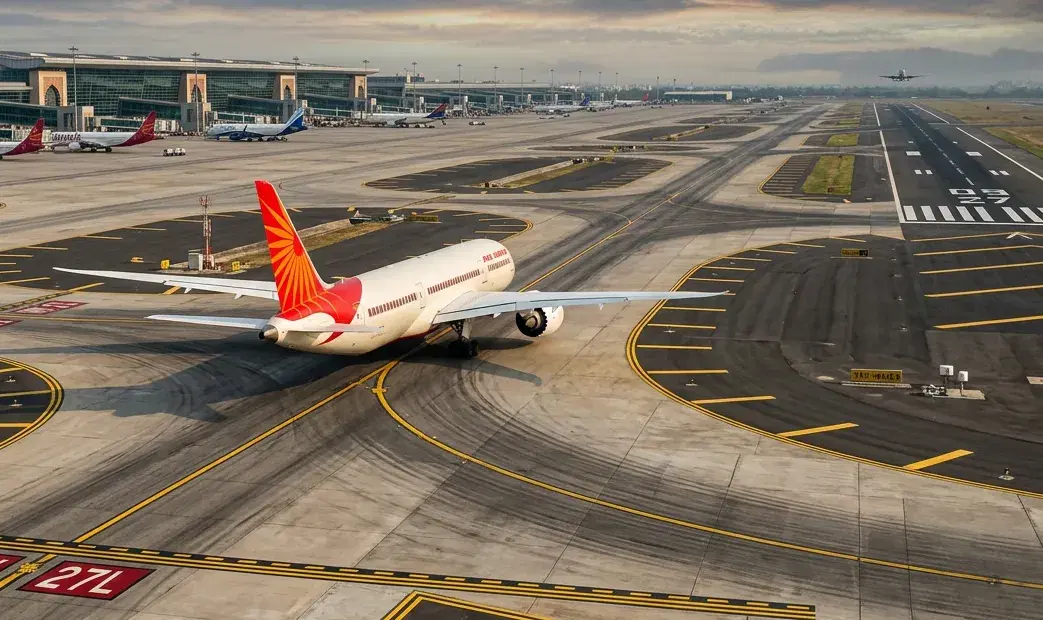

Engineering Safety into the Tarmac: A Systems Approach to Airside Design
Engineering Safety into the Tarmac: A Systems Approach to Airside Design
On this page
Introduction
The history of aviation safety has long been defined by a reactive cycle: identifying a failure, analyzing the cause, and implementing a mitigation strategy. While this approach has significantly reduced the frequency of accidents, modern aerospace engineering demands a shift toward proactive design. Instead of simply reacting to risks, modern airside infrastructure must be engineered to prevent those risks from manifesting in the first place.
To achieve this, we must move beyond a narrow definition of "Airside Safety." It is often mistakenly equated with simple obstacle clearance or adhering to minimum taxiway widths. However, true airside safety is a holistic discipline. It involves ensuring that every component—from the movement areas and taxiway systems to the complex interplay between ground servicing equipment and aircraft paths—operates harmoniously.
This necessitates the adoption of a "Systems Viewpoint" in airfield planning. Traditional design often falls short because it treats components in isolation; for example, a runway system may be optimized without adequate consideration for how it impacts surrounding taxiway infrastructure [1]. Conversely, a systems approach recognizes that an airfield is a cohesive ecosystem where the performance of the whole is dictated by its weakest link [2]. By analyzing the interplay between landside access, apron layouts, and movement areas, engineers can identify potential bottlenecks and safety hazards before they are codified into concrete.
The core objective of this exploration is to move beyond reactionary compliance. By integrating safety, operational efficiency, and infrastructure design as interdependent variables, we can create airside environments that are not just safe by regulation, but inherently resilient by design.
The Systems Approach to Airfield Planning
In traditional aviation infrastructure design, there is a tendency to treat the airfield as a collection of independent components: the runway is one project, the taxiway system is another, and the apron is a third. This fragmented approach often results in "siloed" design, where optimizing one element—such as maximizing runway throughput—may create downstream inefficiencies or safety hazards in the taxiway or apron areas [1].
To engineer safety into the tarmac, one must move beyond this linear logic and adopt a Systems Approach. This means viewing the airfield as a cohesive, interconnected organism where the output of one zone becomes the input for the next.
Identifying and Avoiding "Hot Spots"
Fragmented planning often leads to the creation of "Hot Spots"—geographic areas where high traffic density, complex maneuvering, or infrastructure bottlenecks increase the probability of incidents. When taxiway and apron systems are designed without considering the flow of the rest of the airfield, they often become inefficient or require awkward, high-risk maneuvers to manage aircraft movement. By utilizing a systems view, planners can identify these bottlenecks before they are paved, ensuring that the transition between high-speed taxiing and slow-speed ground handling is fluid and safe.
Bridging the Landside and Airside
The system does not stop at the security fence. A critical failure in traditional planning is the lack of integration between landside infrastructure (passenger terminals) and airside operations. Without a holistic view, passenger buildings can be designed without a clear understanding of how they interface with apron areas and taxi lanes [1].
A system-centric approach ensures that:
- Vehicle Interaction: The movement of ground service equipment (GSE), tugs, and dollies is integrated with aircraft flow [3].
- Flow Propagation: The layout accounts for how a delay in one sector—such as a slow gate turnaround—can propagate through the entire taxiway system, affecting and potentially compromising overall flight safety [8].
Economic and Safety Integration
Finally, a systems approach requires weighing economic implications alongside safety. Often, design choices are made to minimize immediate capital costs (CAPEX), such as shortening taxi routes or reducing pavement area. However, these "savings" can result in significantly higher operating costs (OPEX) for airport users by increasing taxi times and fuel burn [1].
By adopting a comprehensive master plan, designers can balance these trade-offs, ensuring that the infrastructure not only facilitates safe, efficient operations today but remains economically and operationally viable as the entire airport system evolves [1][9].
Mitigating Runway Inresions through Intelligent Design
Runway incursions—the unauthorized entry of an aircraft, vehicle, or personnel onto a protected runway area—represent one of the most critical threats to aviation safety. These incidents can occur due to a variety of factors, including pilot error, navigational inaccuracies, or infrastructure flaws. By addressing these risks during the design and planning phase, engineers can move beyond reactive safety measures and toward a proactive "systems approach" that builds safety into the very fabric of the airfield.
Minimizing Runway Crossings
The primary goal of intelligent design is to reduce the opportunities for an incursion to occur in the first place. This involves evaluating the layout to minimize the frequency of runway crossings. By optimizing taxiway geometries and optimizing the flow of traffic, planners can ensure that aircraft are moved more efficiently while minimizing the need to cross active runways [3]. A lack of a systems view often leads to inefficient layouts that inadvertently increase the complexity of navigation; therefore, integrating these perspectives early ensures that taxiway and apron systems work in harmony with the runway environment [1].
Creating Clear Vision Paths
Human factors play a significant role in airside safety. Designing for clear vision paths involves ensuring that pilots and operators have unobstructed views of the entire runway environment. This reduces the cognitive load on the crew and provides clear visual cues during critical maneuvers. By removing visual obstructions and ensuring clear sightlines, the infrastructure supports better situational awareness, allowing for more confident and safer navigation.
A Dedicated Incursion Prevention Program
Rather than treating runway safety as an isolated checklist item, it should be integrated as a core component of the design lifecycle. A formal runway incursion prevention program during the planning stage ensures that every new runway and taxiway is scrutinized for potential conflict points [7]. This proactive approach involves coordinating with stakeholders—including aerodrome operators, aircraft operators, and Air Traffic Services (ATS)—to ensure that the infrastructure design addresses safety priorities before the first stone is laid [10].
Designing for Reduced Friction
Finally, intelligent design seeks to reduce "friction" between different modes of movement. This involves creating layouts that minimize the interaction between ground vehicles and aircraft. By optimizing route planning and using physical devices to control vehicle speeds and flow, designers can create a segregated and streamlined environment. By prioritizing these factors during the initial design phase, engineers can mitigate the root causes of runway incursions, ensuring a safer and more resilient airside infrastructure.
Taxiway and Apron Optimization
Optimizing the flow of aircraft between the runway and the gate is not merely a matter of pavement dimensions; it is a complex logistics challenge where safety and operational efficiency intersect. A systems approach requires moving beyond the siloed design of runways, where traditional planning often neglects the downstream implications for the rest of the airfield [1].
Analyzing Capacity and Identifying "Hot Spots"
To achieve a high-performance airside, taxiway capacity must be analyzed as a function of specific airport constraints rather than as a generic infrastructure layout. During the planning phase, it is critical to identify "Hot Spots"—areas where congestion can lead to increased fuel burn, delays, and heightened risk of incursions or conflicts [3]. By analyzing peak hour demand and design flight schedules, engineers can identify points where opposing traffic or blocking due to push-back sequences might create bottlenecks. The goal is to minimize taxi distances and times, which directly impact both operational costs and the long-term environmental footprint of the airport [3].
Seamless Flow: The Apron-Taxiway Interface
A critical failure in airside design occurs when there is a lack of integration between landside passenger buildings, apron areas, and taxiway systems [1]. Efficient flow depends on how well these zones interface. This is particularly vital in the apron, which is characterized as a high-activity zone with a variable environment of both fixed and mobile obstacles [2].
Designers must account for the distinct operational profiles of different parking configurations:
- Contact Stands: Require precise maneuvering space and direct links to terminal infrastructure to ensure rapid passenger throughput.
- Remote Stands: While offering flexibility, these may involve different operational requirements, especially regarding overnight parking versus active flight movements [3].
Balancing Throughput and Maneuvering Safety
The core tension in airside design lies in balancing the density of aircraft with the necessary safety margins. Because the apron environment involves a higher risk of collision compared to standard taxiways, aircraft must maintain specific clearances and follow rigorous movement procedures [2].
Optimization involves ensuring that the layout allows for these safety margins while simultaneously accommodating the necessary amount of aircraft. This requires a holistic view: ensuring that the taxiway system provides efficient connections to cargo and passenger areas without creating unnecessary infrastructure costs or inefficient, sprawling layouts [1]. By designing for the "system" rather than individual components, engineers can ensure that high-density turnarounds do not compromise the safe movement of aircraft.
Design Specifications for Runway End Safety
Engineering safety into the tarmac begins long before an aircraft touches down; it starts with the precise geometric definition of the runway's perimeter. The Runway End Safety Area (RESA) serves as a critical buffer zone designed to mitigate the severity of undershoot or overrun scenarios. From a design perspective, the primary objective of the RESA is to ensure that if an aircraft breaches the paved surface, it does not sustain structural damage—such as fuel tank breaches, fuselage breakage, or landing gear fractures—that would result in serious consequences for passengers and crew [11].
Structural and Geotechnical Integrity
To achieve this, the RESA must be engineered as a clear, unobstructed zone. Design specifications mandate that no embankments, ditches, or significant geographical features (such as roadways, railways, or watercourses) exist within these areas [11]. Furthermore, engineers must adhere to strict limits on positive and negative slopes to ensure a predictable deceleration path. These parameters are not merely guidelines; they are essential for maintaining the integrity of the safety zone during an emergency.
Engineering for Deceleration and Access
Effective airside design also involves optimizing the physical environment for emergency response. This includes:
- Emergency Access: Facilitating the swift movement of fire and rescue vehicles to reach an incident site.
- Surface Requirements: Ensuring that the terrain can support the weight and maneuverability of large-scale emergency equipment.
- Geometry and Clearways: Proper positioning and length restrictions on clearways are vital to maintain safe flight paths while providing adequate buffer zones.
Systems Integration in Planning
Because runway end siting is often one of the most complex and overlooked elements of airport planning [9], a systems approach is required. This involves coordinating the interplay between the runway's geometry, the aircraft's approach categories, and the surrounding infrastructure. By integrating these safety zones into the initial design phase—rather than treating them as an afterthought—engineers can ensure that the airfield infrastructure supports both the operational requirements of flight and the safety mandates of emergency crisis management [12].
Integrating Infrastructure and Operational Flow
True aviation safety is not achieved by optimizing individual components in isolation; it is a byproduct of systemic harmony. A common pitfall in airfield design is the "siloed" approach, where the runway configuration is optimized as a geometric exercise, and passenger terminal buildings are designed with a limited understanding of how they interface with the apron and taxiway systems [1]. To engineer safety into the tarmac, the infrastructure must be treated as a single, fluid ecosystem where the movement of aircraft, ground support equipment (GSE), and passengers flow seamlessly from one node to the next.
The Interface of Landside and Airside
When terminal placement and apron layouts are decoupled from the broader taxiway infrastructure, the result is often a series of "bottleneck islands." Effective design requires harmonizing the positioning of terminal gates with the practical requirements of aircraft maneuvering. This includes evaluating how specific aircraft types and airline-specific operational preferences—such as wingtip clearance and push-back requirements—impact the layout of the apron [3]. By analyzing these variables early, designers can ensure that taxi distances and times are minimized, reducing the time aircraft spend in high-risk transition zones.
Infrastructure as a Safety Conduit
Beyond the movement of aircraft, the design of boarding bridge infrastructure is a critical component of ground safety and operational flow. These structures are not merely pedestrian bridges; they are critical nodes that must account for both passenger movement and the safe operation of ground service equipment. Every element of this infrastructure must be integrated with the overarching flow of the ramp, ensuring that the physical design does not create friction points for ground crews or safety hazards for passengers.
Avoiding the Compounding Delay Effect
Poorly integrated design leads to a "compounding delay" effect, where a bottleneck at a poorly placed taxiway intersection ripples outward, increasing fuel burn, emissions, and the risk of incursions. When infrastructure fails to account for the unique needs of slow-moving ground traffic—such as tugs and dollies—or the spatial requirements of high-clearance vehicles, it creates operational friction [3].
By adopting a systems-centric approach, designers can move beyond simply avoiding collisions to actively facilitating a flow that minimizes time-on-ground and maximizes safety margins. This ensures that the airport operates not just as a collection of runways and gates, but as a synchronized machine where infrastructure serves the flow.
Conclusion
The transition from a component-based approach to an integrated systems methodology represents a paradigm shift in aviation infrastructure. By moving beyond the siloed design of runways, taxiways, and aprons, we address the reality that these elements do not operate in isolation. An integrated approach ensures that the complexities of ground handling, aircraft movement, and passenger flow are harmonized, preventing the inefficiencies and safety risks that arise when systems are designed without considering their interdependencies [1].
In this framework, the role of the designer evolves from a mere technical drafter to a proactive safety advocate. By prioritizing safety at the conceptual stage—rather than as a post-hoc correction—engineers can proactively address the nuances of ground service equipment movement, specialized vehicle constraints, and high-speed aircraft paths. This proactive stance ensures that safety is "baked into" the tarmac, rather than added as a layer of mitigation.
Furthermore, robust airside design must be forward-looking. As aviation demands evolve and new technologies emerge, infrastructure must be resilient enough to adapt to changing regulations and increased traffic volumes [9]. A systems-oriented design provides the necessary flexibility to accommodate these advancements without requiring extensive and costly structural overhauls.
Ultimately, the synergy between safety, operational efficiency, and economic viability is the cornerstone of modern airport infrastructure. When safety is engineered into the system from the outset, it minimizes the risk of operational bottlenecks and costly retrofits. By treating the airfield as a cohesive, integrated ecosystem, we create a resilient infrastructure capable of supporting the global aviation network while upholding the highest standards of safety and operational excellence.